Satin Gold vs. Antique Brass vs. Matte Black vs. Walnut

Choosing a curtain rod finish — brass, metal, or wood — feels like a bigger decision than it actually is. A customer came in last week stuck on hers; we matched her finials to the posts on her four-poster bed and had it settled in about five minutes. Most of the time it really is that simple: pull the finish from your wood blinds, your furniture knobs, or your ceiling fan, and you're most of the way there.
The rod lives at eye level, runs the full width of the window, and stays put for years, so it earns a little thought — just not the week of agonizing it usually gets. Here's how the four finishes we get asked about most actually behave in a real room.
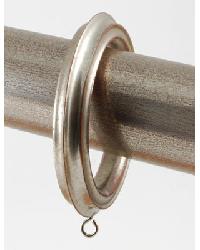
Satin Gold
This isn't the shiny polished brass your grandmother had on the bathroom faucet. Satin gold is warm, brushed, and soft — a metallic that catches light without shouting about it. It plays beautifully with creams, warm whites, greens, and navy, and it sits right next to warm wood tones like it was always meant to be there. If your room leans transitional or modern with a warm streak, satin gold is the finish that makes a window look pulled together without looking fussy. It's earned its popularity honestly.
Antique Brass
Antique brass has some age baked into it — a little brown, a little patina, none of that mirror shine. That's the whole point. It reads traditional and old-world, and it's the natural partner for jewel tones, darker woods, and rooms that already have some history to them. Practically speaking, it's one of the more forgiving finishes we sell: it doesn't show fingerprints, it doesn't flag every speck of dust the way a bright finish does, and it tends to look better the longer it's up. If you love a classic, layered room, this is your finish.
Matte Black
Matte black is the graphic one. It frames the window like a line drawing and gives a space instant definition — which is exactly why it works across so many styles, from modern to farmhouse to a little industrial. Set against white or pale walls, it's crisp and architectural. The one honest caution: in a small room where everything's already pale and soft, a heavy black rod can feel like it's doing a lot. But if you want contrast and structure — if you want the window to be a feature and not a whisper — matte black delivers every time.
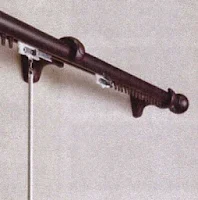
Walnut and Wood Finishes
Wood does the opposite of black. Instead of announcing the window, it softens and warms it, letting the rod settle into the room rather than draw a hard line across it. Walnut and other wood tones are wonderful in bedrooms, traditional spaces, and any warm neutral room where you want everything to feel calm and cohesive. Here's a bonus most people don't think about: if you already have wood blinds or wood furniture, a wood rod ties the whole window back to what's already in the room. It blends where black contrasts.
So How Do You Actually Pick?
Start with what's already in the room. Look at your other metals and woods — cabinet hardware, light fixtures, faucets, furniture legs. Rods don't have to match those exactly, but they should belong to the same family: warm with warm, cool with cool. Then ask yourself one question — do you want the rod to blend in or stand out? If you want it to disappear, go wood or pick a finish close to your wall color. If you want it to frame and define, go matte black or a metal with some contrast. Last, factor in the room itself. A big, bright room can carry a bold rod; a small, soft one usually wants a finish that doesn't fight for attention.

And here's the part that actually matters: there's no wrong answer that a magazine gets to decide for you. If you love a finish, it fits your room. Decorate what you love — the rest is just details.
We carry curtain rods in all four of these finishes and plenty more, in stock sets and custom lengths, from brands like Vesta and Kirsch. If you're not sure how a finish will read against the woods and metals you already have, we can send you color chips so you can hold them up in the room and match for yourself — a lot easier than guessing from a screen. Give us a call or drop us a line anytime, and we'll get some chips headed your way.